Tiki Huts & Palapas

We are the largest exporters of thatch material in the USA. Forever Bamboo’s products are a great way to add a tropical feel, whether for the home, business or your lifestyle. This is island style living! This Kits are Ready to Go! Each kit comes with two layers of pre-woven thatch covering. Ready for you to put together, our kits include, pre-cut lumber, pre-drilled and partially assembled. Easy to follow, step-by-step-instructions. Fire Retardant available (certificate to be issued)

  • Bamboo for you too!

    Posted on October 12, 2009 by admin

    pandabear

    We’d like to thank the Environmental Bamboo Foundation for these facts:

    BAMBOO IS:

    The fastest growing woody plant on this planet. It grows one third faster than the fastest growing tree. Some species can grow up to 1 meter per day. One can almost "watch it grow". This growth pattern makes it easily accessible in a minimal amount of time. Size ranges from miniatures to towering culms of 60 meters.

    A critical element in the balance of oxygen / carbon dioxide in the atmosphere. Bamboo is s the fastest growing canopy for the re-greening of degraded areas and generates more oxygen than equivalent stand of trees. It lowers light intensity and protects against ultraviolet rays and is an atmospheric and soil purifier.

    A viable replacement for wood. Bamboo is one of the strongest building materials. Bamboo's tensile strength is 28,000 per square inch versus 23,000 for steel. In the tropics is it possible to plant and grow your own bamboo home. In a plot 20m x 20m2, in the course of 5 years, two 8m x 8m homes can be constructed from the harvest; every year after that, the yield is one additional house per plot.

    An enduring natural resource. Bamboo can be selectively harvested annually. Bamboo provided the first re-greening in Hiroshima after the atomic blast in 1945. Thomas Edison successfully used a carbonized bamboo filament in his first experiment with the light bulb.

    Versatile with a short growth cycle. There are over 1000 species of bamboo on the earth. The diversity makes bamboo adaptable to many environments. For example; it can be harvested in 3-5 years, versus 10-20 years for most softwood. Bamboo tolerates extremes of precipitation, from 30-250 inches of annual rainfall.

    A renewable resource for agro-forestry products. Bamboo is a high-yield renewable natural resource: ply bamboo is now being used for wall paneling, floor tiles; bamboo pulp, for paper making, briquettes for fuel, raw material for housing construction, and rebar for reinforced concrete beams.

    A soil conservation tool. Bamboo is exquisite component of landscape design. Its anti-erosion properties create an effective watershed, stitching the soil together along fragile river banks, deforested areas, and in places prone to earthquakes and mud slides. The sum of stem flow rate and canopy intercept of bamboo is 25% which means that bamboo greatly reduces rain run-off, preventing massive soil erosion.

    A landscape design element. Bamboo is an exquisite component of landscape design. For the human environment, bamboo provides shade, wind break, acoustical barriers and aesthetic beauty.


    This post was posted in Bamboo Fence, Forever Bamboo, Tiki Huts & Palapas and was tagged with Bamboo Decor, bamboo facts, build with bamboo, decorate with bamboo, eco-friendly, Eco-friendly bamboo, sustainable building, sustainable decor, Why bamboo

  • How to Build a Palapa
    Posted on October 1, 2009 by admin

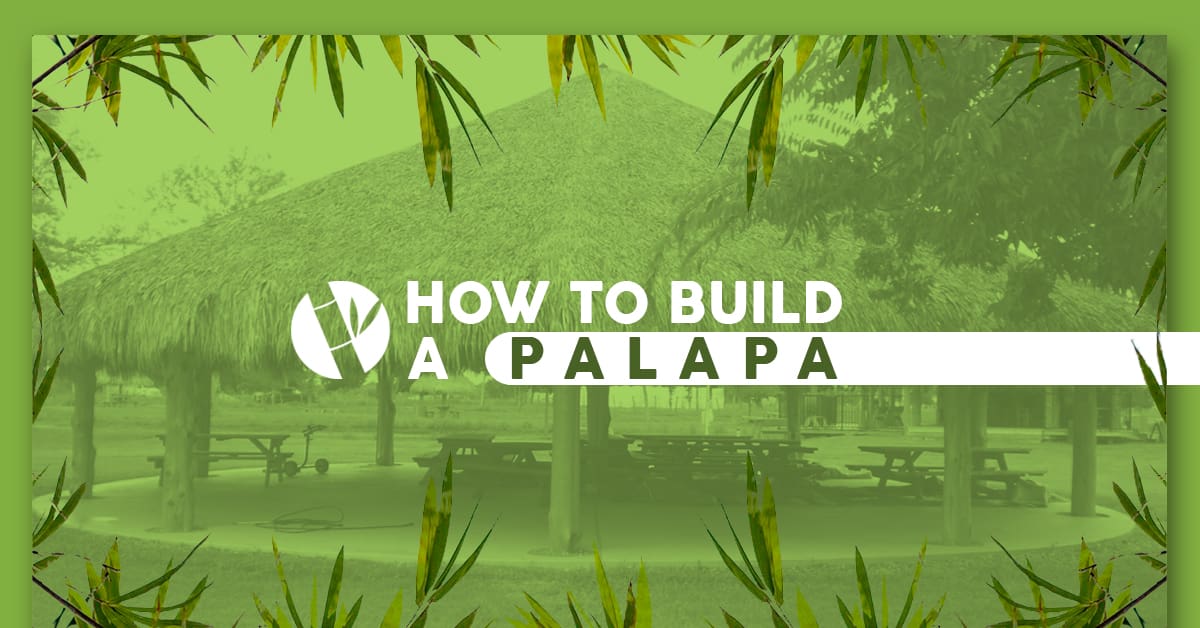
    The following directions are for one option only. Please know that you have many options and building styles to choose from; don’t hesitate to dive in and explore and ask questions.

    The most important thing you can do, prior to building your palapa is to plan things carefully. Plan properly to avoid mishaps and poor construction. It can be difficult to remove and/or relocate a palapa so get any input available to you and find a proper location. The ideal spot for your palapa should have nothing overhanging and the ground must be free from obstructions. Be sure to contact your utility company if you need to do any digging. So you’ve made proper plans, discussed your options with family, friends, and your local tiki hut masters; be sure you have footings in place before you start building.

    The Palapa posts and beams may be heavy and awkward so be sure to have trusty, strong helpers to assist. An "A" frame helps to stabilize the posts while leveling and plumbing. You might choose to elevate the posts off the patio using adjustable post bases. By doing this, you get the post off the floor and ensures it will not decay from water damage. This also makes the structure "portable". This can come in handy depending on your local zoning ordinance. Galvanized lag bolts help to fasten all the framing together. Once you have the framing in place you can start "stringing" the latillas or prepping so your thatch will have support or something to lay on. (A latilla is a limb or thin pole, used as a ceiling material between beams). Depending on the design you choose, you may or may not use them.

    latilla

    Some folks have the latillas exposed with the bamboo reed or thatch sandwiched between the roof sheathing and the latillas. Your roof can take on it’s own unique character depending on the materials you choose. Bamboo, plywood, thatching, and a variety of other options will help serve you. If you are using latillas, once the latillas are in place and fastened together, lay the reeds or thatching across the latillas prior to stapling the plywood down. Be sure that someone is watching to be sure your reeding or thatch is in place before you fasten it.

    Again, do the research and enjoy yourself! Your needs may differ and lead you to a whole different palapa experience.

    palapap

    button-more-info


    This post was posted in Forever Bamboo, Tiki Huts & Palapas and was tagged with backyard decor, Build a Palapa, Home Palapa, how to palapa, island style, Palapa, palapa party, Palapas, tropical decor, tropical theme

  • Palapa

    Posted on October 1, 2009 by admin

    Palpoozle

    A palapa; sometimes referred to as a tiki hut or grass hut, can assume a variety of forms. A typical palapa is a rustic, thatched-roof, open-sided structure. A palapa can be supported by a single pole, (average pole is six inches in diameter), or more. There are even large palapa structures supported by 18 poles or more. It all depends on your needs. The thatch used to cover the roof of a palapa typically consists of dried and woven palm-tree leaves or reeds that are glued together. Palapas provide shade from the hot sun and are typically designed to withstand a variety of climates.

    There are a lot of surf culture and retro aficionados out th ere~A Palapa is right up your alley. Time to put yer feet up and relax in the shade of a Palapa.

    button-more-info


    This post was posted in Tiki Huts & Palapas and was tagged with backyard ideas, eco-friendly decor, Home decor, island style, Palapas, sustainable decor, Tiki Huts, tiki lovers, tropical flavor, Umbrellas, unique decor, what is a palapa

  • Tiki Thatching

    Posted on September 22, 2009 by admin

    tikithatch

    Your tropical tiki hut or tiki bar needs a roof!

    There are different varieties of palm leaves to choose from so consider your weather conditions, personal design tastes, and the look you are hoping to achieve. Palm thatch comes in a variety of sizes. You can purchase palm thatch in square sections: either, 3' x 4' or 4' x 4'. There are also rolls of palm thatch available: 30" x 22' or 30" x 57'.

    Calculate the square footage of your roof first, to be aware of how much thatching is required. Purchase an additional 10%, just in case. If your roof is a unique size, you may want to get a bit extra to avoid having to use small pieces of palm thatch. You can even purchase treated palm thatch you can that is fire retardant if that is a concern for you.

    When it comes to thatching your roof, you have options, keeping your roof dimensions in mind. If you are using a plywood base, you can easily staple the thatch directly to the roof. There are other methods that might make it easy to attach and remove the thatch.

    For example: the use of wood lathing, 2" wide x 1/4" thick x 8' long. Lay the thatching on the roof and then place the lathing over the palm thatch every foot. Screw the lathing down using rubber gasket screws into the joists. You can also use chicken wire over the palm thatch and attach the chicken wire at the outside edges of the roof.

    If you are not using a plywood roof and have an open roof between joists, you need support under the thatch, at least ever 4 inches or therebouts.

    button-more-info


    This post was posted in Tiki Huts & Palapas and was tagged with backyard decor, backyard options, Bamboo Decor, build a tiki hut, Decorating with bamboo, Palapa, paradise at home, Thatch for your tiki hut, Thatch ideas, Thatch Roof, thatch your palapa, thatch your roof, Thatching, theme decor, tiki bar, Tiki Hut, tiki lovers, Tiki Thatch

  • How to build a Tiki Hut

    Posted on September 18, 2009 by admin

    There are many styles, shapes, and specifications to be explored depending on your needs. The following are merely suggestions and not your only option. Also, please note: the photographs are simply Tiki Hut options so you can see a variety of styles. The photos are not related to the directions in this or any of our blogs.
    A large patio or even near your pool might be just the place for your tiki hut. Avoid putting it on the grass as it might damage with rain due to moisture and rot.
    A table or a moving bar is a great start, this can serve as your base. Plywood and bamboo poles are needed for the roof of your hut, and depending on your needs, plywood sheeting. Some people like to use plywood sheeting to attach the leaves and/or thatching material of the roof to.
    The design of your roof depends on the building specifics and how much protection from the elements you might need. For example: if the structure you are coating is an oblong bar, the best choice for the roof is two “A” frames, raised on bamboo poles that form a pitch. The advantage of this design is that it can be as large or small as you desire. It is also easier to thatch because the two sides are flat.
    For covering very small areas like an outdoor patio set, consider a giant umbrella design. With the smaller option, the roof is supported by a central pole, which has shorter poles lashed around it.
    Materials for a Thatched Roof
    * The thatch itself: The material you use for this will depend on the style you prefer and the environment you live in. The thatch palm is native to North America so might be the cheapest and more widely available there.
    * Saw to cut poles to size
    * Bamboo or hardwood poles
    * Hammer and appropriate nails
    * Gloves to protect your hands
    Applying Thatch to Roof
    Thatch is readily available in panels, which can be bought in sections. There are also premeasured complete roofs available to suit common sized tiki huts. These resemble blankets, which are wrapped around the structure and nailed into place.
    Maintaining Your Thatch Roof
    Presuming that your roof will not to be exposed to hurricane or severe storm conditions; it ought to last between 3 and 5 years. The ridge at the top of the roof will need attention before any other part, which can be replaced as often as needed. Thatch is an adaptable material, rain runs straight off it. In a very dry climate, hose your roof down at least twice each summer to prevent any build up of dirt or grime. You might also spray the thatch with a very diluted bleach solution, to keep any mold or mildew away.
    The following is a building option for a poolside Tiki Bar and a few of the materials you might need.
    * Treated or rot resistant lumber and/or bamboo poles
    * Counter top materials of your choice
    * Palm leaves
    * Assortment of tools
    You need to determine a pattern and shape for the Tiki Hut. Start by building the frame. Be certain you are building in the exact location you want it; the frame quickly becomes heavy.
    Plan for a sink and a refrigerator when framing the hut. They add to the finished products. It is best to purchase your bar stools in advance so you know the height the countertop will be.
    Posts are required for the roof support. Bamboo poles are very popular, but you can use whatever option suits your style and/or décor choice. Natural looking is best if you are going for a theme. Cedar is naturally rot resistant and should last indefinitely under the roof.
    Frame the roof. A good roof pitch helps when it comes to rain water drainage.
    If you want help to make your roof more water resistant, you might consider finishing the roof with treated plywood and seam sealing tape over all of the plywood joints. This will help in addition to the palm leaves that will top it off.
    Complete the outer layer of the hut. Some people use treated plywood to be later finished with a layer of bamboo screening. We recommend you explore your options and have fun [Read More]


    This post was posted in Tiki Huts & Palapas and was tagged with backyard idea, backyard paradise, eco-friendly decor, eco-friendly party idea, how to build tiki hut, How to tiki, island style, palapa at home, palapa ideas, Palapas, party ideas, sustainable decor, tiki bar, Tiki Fan, Tiki Hut, Tiki hut for two, Tiki Huts, tiki lover

  • Tiki Hut

    Posted on June 11, 2009 by foreverbamboo

    The Polynesian or tropical themed garden style never goes out of fashion. You make it distinct with your choice in décor and accessories. In addition, you can make it as affordable or as expensive as you like. The Tiki Hut or Tiki Bar is an exceptional addition, whether you are going for a specific style or simply enjoy entertaining.

    There are a number of tiki bar builders and books to help you build your own. For those of you with basic do-it-yourself skills and a well-equipped tool kit, you might have fun building your own tiki hut or tiki bar.

    Popular construction materials consist mainly of bamboo and thatch. Consider your environment, climate, and specific needs. Bamboo and thatch will age or deteriorate faster when exposed to excessive rain or sun.

    blue

    button-more-info


    This post was posted in Tiki Huts & Palapas and was tagged with Tiki Hut

6 Item(s)